

In short
A farm sets its crop mix by working inside three limits: how often each crop can return to the same field, how much work the machinery and crews can finish in time, and what each crop is expected to earn.
The first two are hard limits and the third decides what remains. Planva keeps the rotation by season and prints the rotation map with an area summary, so the area actually sown can be checked against the plan.
Plan in this order
A common shortcut is to start from last season prices and add up crops until the hectares are used. That order can break the rotation and overload a short window of the year. Reverse it. Start from the fields and their history, apply the rotation ceilings, test the workload, and only then compare margins between the crops that fit.
How rotation caps each crop
Disease and weed pressure build up when a crop returns too soon. The published guidance below is general, so check it against your region and your own field records.
| Crop or problem | Guidance | Source |
|---|---|---|
| Sunflower | The review says few farms accept sunflower on a field only once in 7 to 10 years, and cites a seven-field rotation with corn as the best prevention. Broomrape infestation was reported about four times higher after a gap of 2 years than after 6. | Agroinvestor review, 2014 |
| Broomrape seed | Persists in soil for up to 12 years in one source and for more than 20 years in another. | AgroAtlas, Agroinvestor |
| Rapeseed | Not within 4 years on fields that grew crucifers or sunflower. Not after sugar beet, because of the risk of nematodes. | Ukrainian Farmer, via UkrAgroConsult, 2024 |
The arithmetic of a ceiling
If a crop may return to a field only every N years, it can hold at most one Nth of the arable land in a stable rotation. This is arithmetic, not a limit published by any source, and a ceiling is not a target. The table applies it to invented figures for a farm with 1,000 ha of arable land.
| Crop | Return gap, years | Ceiling on 1,000 ha (arithmetic only, invented figures) |
|---|---|---|
| Sunflower | 7 | about 143 ha |
| Sunflower | 10 | 100 ha |
| Rapeseed | 4 | 250 ha |
Two oilseeds that share diseases also share the calendar. If rapeseed must not follow sunflower for 4 years, the fields chosen for one are not available to the other, so the ceilings do not add up. A field map with the crop of each season is the only way to see this before sowing. The crop rotation guide shows how to lay that out.
Machinery and labour windows
Iowa State Extension notes that diversification of crops spreads out the periods when timely completion of field operations is critical. Yield loss from late planting starts later for soybean than for corn, and harvest can be spread over a longer time. Growing more than one or two crops therefore lowers the machinery capacity needed for a given area, although it may require extra types of machine, especially for harvest.
The same publication gives a rule of thumb for Iowa. Weather is suitable for fieldwork about three days in five in spring and three in four in autumn. Your region will differ. The practical test is simple. For each crop, count the hectares that must be sown or harvested in its critical window and divide by what the machines and crews finish per suitable day.
Margin decides what is left
Once the ceilings and the windows are set, compare the crops that fit. Gross margin per hectare is expected yield multiplied by expected price, minus variable costs per hectare. Use your own yields from the last seasons, not a national average, and keep a worse year in the average. The yield guides for sunflower, soybean and rapeseed show how far a single year can move.
What to keep so next year is easier
- Crop per field per season. The history is the only way to apply a return interval.
- Planned and sown area by crop. The gap shows where the plan met the weather.
- Dates of the critical operations. Sowing and harvest dates show whether the windows held.
- Yield by field. It feeds the margin comparison next year.
How this works in Planva
- Crop rotation by season. Crop, variety, sowing and harvest dates, yield in c/ha and harvest in tonnes for every field.
- Rotation map. A crop filter on the map prints to PDF or JPEG with an area summary.
- Agroplans. Season, fields, dates and operation type, with progress counted in hectares.
- Field register. Boundaries and areas. A field group carries three area types: calculated, official and worked.
Planva records the plan and the fact. It does not recommend a crop mix. See field history records for what to keep on each field, and the farm management software page for the platform.
Sources
Common questions
Start from fields and their crop history, apply the rotation ceilings for each crop, test the machinery and labour windows, and only then compare gross margins between the crops that fit.
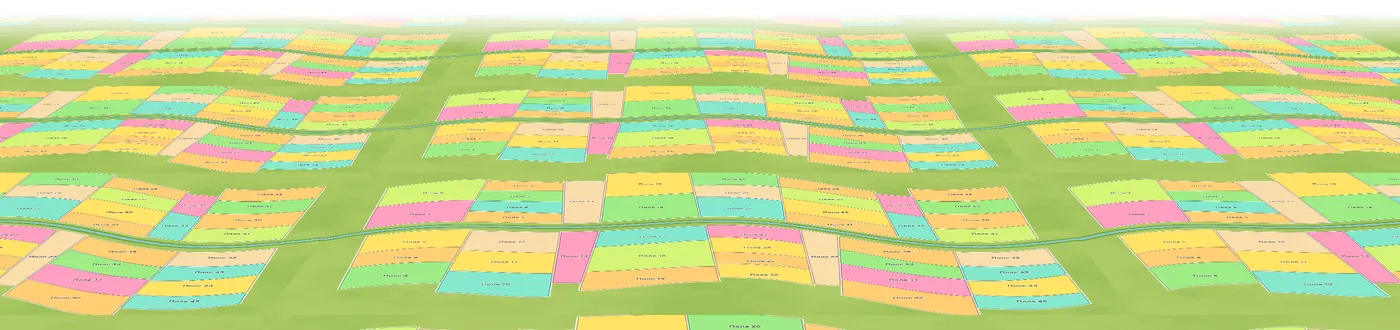
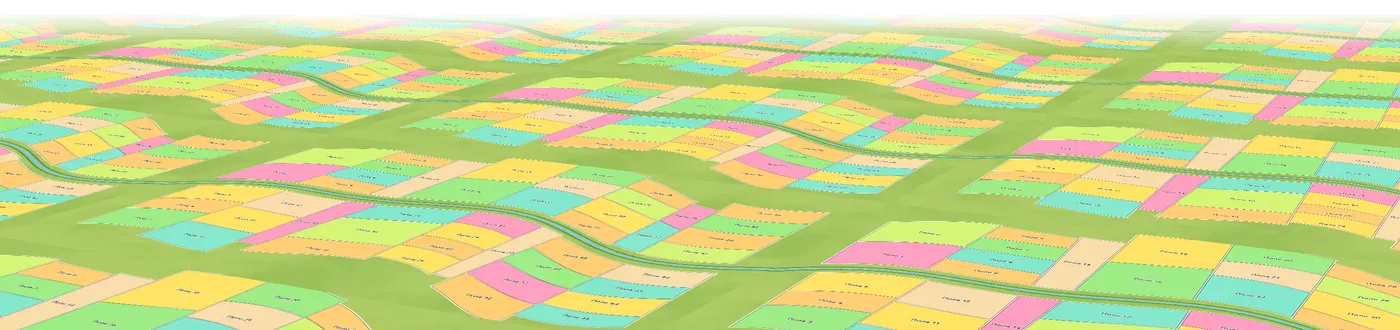
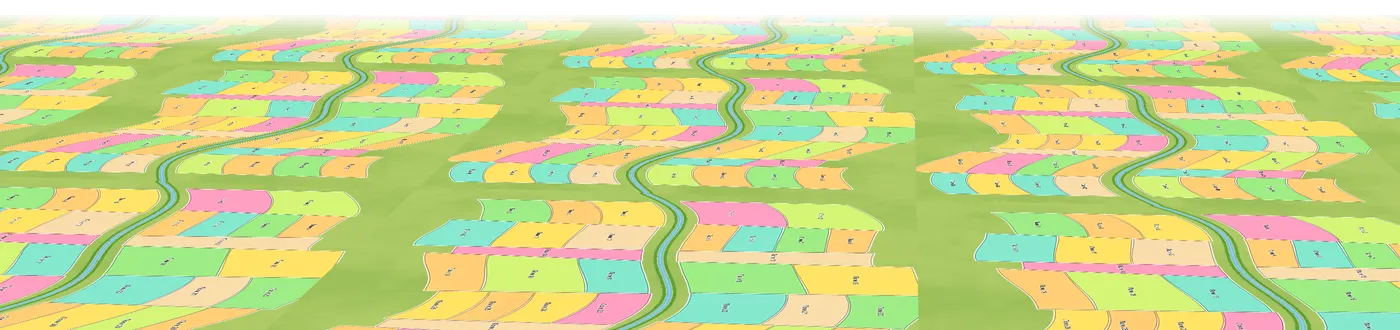
The real Planva interface, shown with test data.